Five Signs of Wood Rot on Trim, Fascia and Soffits
Rot on exterior wood usually announces itself well before it becomes a big repair, if you know where to look and what to press on.
October 13, 2026 · 4 min read
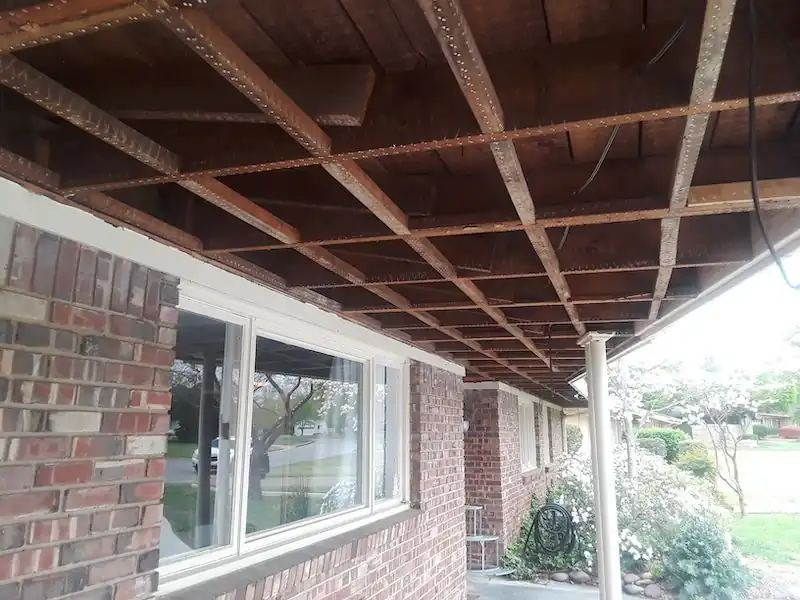
Wood rot is quiet. It doesn't make noise, it doesn't ruin your day, and for a long time it hides behind a coat of paint that looks perfectly healthy. Then one afternoon a screwdriver slides into a window casing like it's cake, and you realize the problem has been growing for years.
The good news is that rot gives off signals. Oklahoma Siding repairs and replaces rotted wood as one of our core services, and the same warning signs come up again and again. Here are five to look for on trim, fascia and soffits, plus what to do about them.
A quick word on where rot starts
Wood rots when it stays damp. A dry board can last a very long time. A board that gets wet, never dries out, and then gets wet again is a meal for fungus. On a house, that usually happens in a few predictable places: where trim meets the ground or a deck, around windows and doors, under gutters that overflow, and anywhere the paint or caulk has cracked and let water in.
Fascia is the board along the edge of the roof where gutters hang. Soffits are the panels under the eaves. Trim is everything that frames windows, doors and corners. All three are exposed, all three get wet, and all three are common spots for hidden damage.
Sign one: discoloration
Dark patches, gray streaks or yellow-brown stains that don't wipe off are the first thing to look for. Discoloration means moisture has been sitting in that board, or running over it, for some time. It doesn't always mean the wood is already rotten, but it tells you where to look closer.
Pay special attention to stains that trace a line down from a gutter seam, a corner or a window head. A pattern like that points to a water source you can fix.
Sign two: softened wood
This is the test that matters most. Press a screwdriver tip or a thumbnail into the board, firmly but not violently. Sound wood pushes back. Rotted wood gives way, feels spongy or crumbles into flakes or stringy fibers.
Try it at the bottom of window trim, at the ends of fascia boards, and on any trim that touches a deck, step or the ground. If you find one soft spot, test around it. Rot rarely stays the size of a coin.
Sign three: musty odors
Sometimes your nose finds it before your eyes do. A damp, earthy smell near the eaves, around a porch ceiling or beside a garage door can mean moisture is trapped in the wood or the space behind it. Soffits are a frequent source because they can hide damp framing above.
If you smell something odd and can't find the cause, check the nearest trim and soffit panels carefully. Look for sagging, gaps or stains around vents.
Sign four: fungus or mold
Visible growth, whether it's fuzzy, powdery, dark spots or small shelf-like fungus growing out of the wood, is a clear sign the board has been wet for long enough to support it. Surface mildew on a clean painted board can be washed off. Growth that comes back, or that is coming out of the wood itself, is a different problem.
Don't paint over it. Paint doesn't kill what's in the board, and the new coat will trap the moisture and make things worse.
Sign five: paint that fails in one spot
If most of your house looks fine and one section is bubbling, peeling or cracking, the cause is usually moisture coming from behind or below, not a bad paint job. The paint is telling you the board underneath is wet or moving.
Check the same spot for the other four signs. Peeling paint at the bottom of a post, at the corner of a window frame or along a fascia seam is one of the most common ways rot reveals itself.
Why you fix it before you paint
Paint is a coating, not a repair. It seals a sound surface and protects it. Put it over soft wood and it will look good for a little while, then lift as the wood underneath keeps moving, absorbing water and breaking down. You end up paying for the paint twice and the repair anyway.
- Cut out the rotted section instead of filling it, when the damage is more than skin deep.
- Replace it with sound material, sealed on all the edges before it goes up.
- Fix the water source, whether that's a gutter, flashing, caulking, or a sprinkler pointing at the wall.
- Prime, caulk and paint the repaired area so it blends with the rest of the house.
That last point is part of how we work. Our wood rot repair doesn't stop at the carpentry. Because we also do exterior painting, the repaired area gets finished to match the rest of your property, and you don't end up hiring a second contractor to cover our patch.
What to do this weekend
Grab a screwdriver and a flashlight and walk the house. Check window sills, door casings, the bottom ends of trim boards, the fascia under the gutters and the soffits above porches and patios. Mark the soft spots with painter's tape and take a photo of each one.
If you find anything, don't wait for next spring's repaint. Rot spreads, and small repairs cost less than large ones. Call Oklahoma Siding at (918) 223-3987 or text (918) 704-0942 for a free estimate anywhere in Tulsa, Broken Arrow, Jenks, Glenpool and the surrounding area. Send us your photos and we'll tell you what we think before anyone climbs a ladder.
Oklahoma Siding, (918) 223-3987
Call (918) 223-3987More articles
LP Smart Siding vs James Hardie: What Swelling Looks Like and Why We Install Hardie Only
If you're comparing LP Smart Siding with James Hardie fiber cement, here is what we tell homeowners and why we only install one of them.
What Happens During a Siding Replacement, Step by Step
A siding replacement is less mysterious once you know the order the work happens in, so here is the job from first scrape to final walk-around.